OneShoreline works to advance policies and implement projects that align long-term resilience to the impacts of climate change. This takes the form of land use and zoning policies; guidance for private development and public infrastructure; designing protections against extreme storms and tides for developed, natural, and recreational areas; and developing public and private investments in this work.
OneShoreline also prioritizes supporting the economic resilience of property owners in the face of climate change because implementing our projects protects life and property, which can lower the rapidly escalating cost to insure that property.
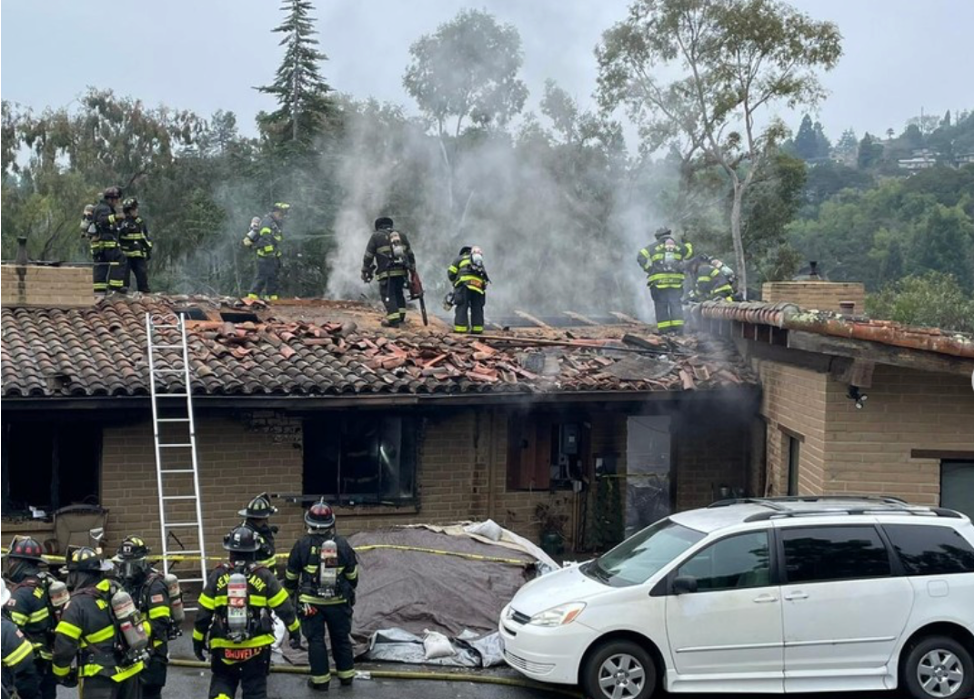
Insurance costs are rising quickly nationwide, including in our backyard. A recent study reported that homeowners in San Mateo County paid an average of $1,809 for home insurance in 2024 (excluding earthquake and flood insurance policies that are required separately)—a 55% increase since 2018. Climate change–related damage and risk are major drivers of rising costs and reduced access to insurance—the number of policies in our county on the State’s FAIR Plan, the insurer of last resort, was eight times greater in September 2025 as compared to five years earlier. This has broad implications for local government because where insurance becomes more expensive and/or unavailable, property values decline, reducing local government revenues at the same time that the cost to build resilience and the cost to finance resilience through bonds increases.
To address this challenge, in late 2025 OneShoreline launched the Home Protection and Insurability Initiative. The goal of this effort is to have actions that reduce flood or wildfire risk at the property scale (by a homeowner) and community scale (by a public agency) result in increased access to private insurance that is priced to reflect those risk reduction actions. To accomplish our goal and improve insurability in San Mateo County, OneShoreline is partnering with the nonprofit Insurance for Good and major private insurers to establish pilot projects that reduce wildfire or flood risk at both the property and community scales. We hope this initiative will serve as a model for the many other regions facing this challenge.
Initial Flooding Focus Area: Belle Air Neighborhood, San Bruno
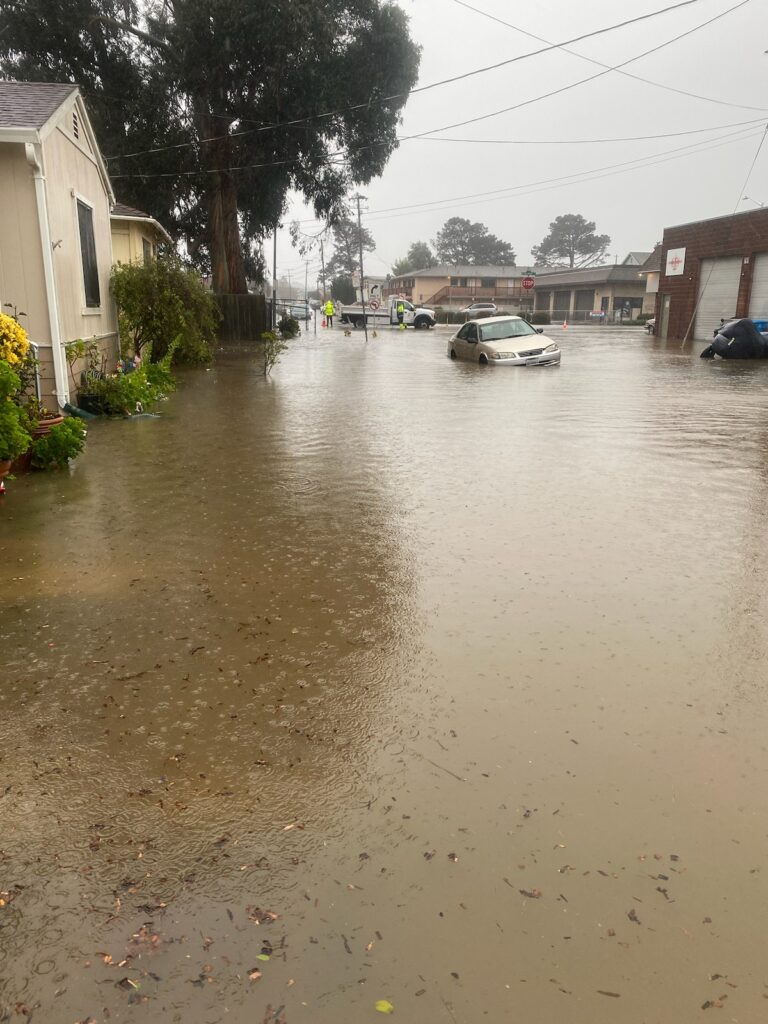
OneShoreline is currently focusing on flood risk reduction in the Belle Air neighborhood of the City of San Bruno within OneShoreline’s San Bruno Creek flood zone. Residents of low-lying Belle Air face persistent flooding from San Bruno Creek when aging undersized infrastructure cannot handle more extreme storms and rising tides.
To address these challenges, OneShoreline is advancing the San Bruno Creek Resilience Project to evaluate long-term flood mitigation solutions and develop a prioritized plan for new projects and policies at the community scale.
At the same time, OneShoreline is taking near-term actions to reduce today’s flooding. At the community scale, we are updating and maintaining the aging infrastructure, and at the property scale we are helping residents purchase flood protection supplies tailored to the specific needs of their homes.
Engaging the Community
Since early 2024, OneShoreline and our partners have spoken with more than 100 households and hosted multiple community workshops. Residents shared stories of repeated damage, financial and emotional stress, and concern about future flooding. While some residents already use tools like sandbags and sump pumps, others lack the resources or information to adequately protect their property. A 2025 Community Insights Report highlighted strong desire for practical, near-term support tailored to diverse household needs.
7th Ave Flood Protection Supplies Pilot
In response to community input and ongoing flood vulnerabilities, OneShoreline launched the Flood Protection Supplies Pilot to provide Belle Air residents with:
- Trusted flood-readiness information
- Flood protection supplies based on resident needs
- Follow-up support and ongoing engagement
In this effort, OneShoreline is partnering with Stanford University researchers, climate-focused community-building consultant Ari Simon, the nonprofits Climate Resilient Communities (CRC) and Rise South City, the City and County Association of Governments of San Mateo County (C/CAG), and trusted Community Leads who help with outreach, communication, delivery of supplies, and ongoing feedback from their neighbors.
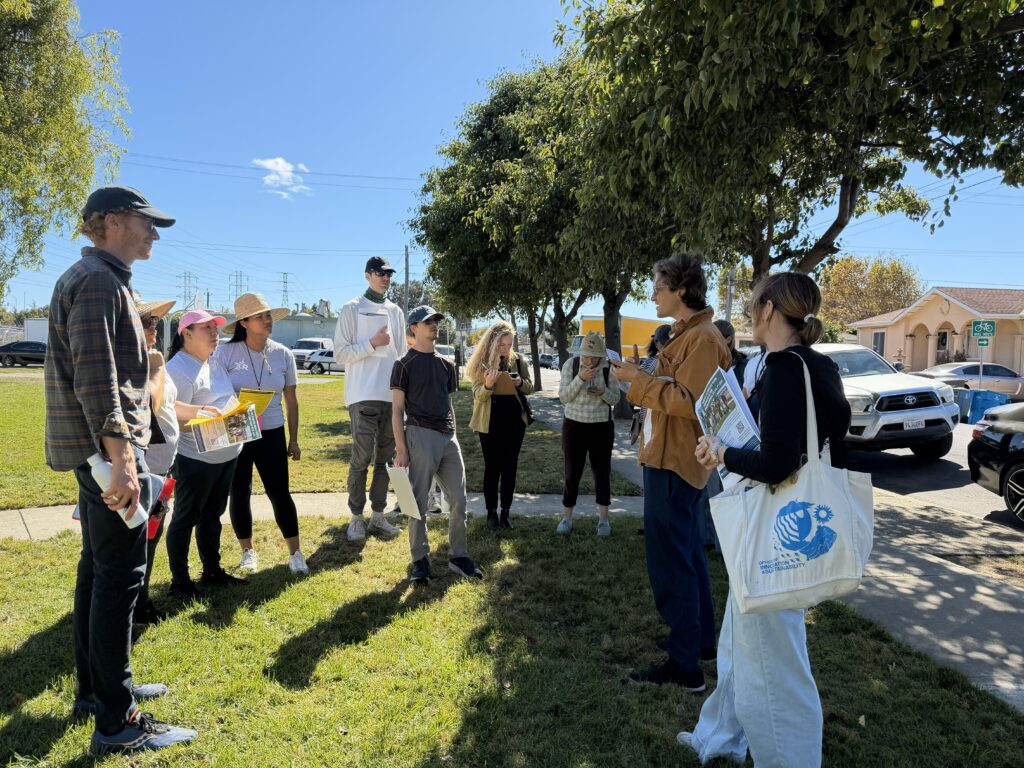
The pilot focuses on about 80 homes along 7th Avenue, the most flood-prone area near San Bruno Creek. Up to 30 households may receive up to $1,500 in eligible flood protection supplies based on the specific needs of each home on a first-come, first-served basis.
In December 2025, supplies were delivered to the first group of participating households in Belle Air. CRC also began home assessments to evaluate drainage conditions and match households with appropriate flood protection supplies. As the pilot continues, OneShoreline will keep working with residents to share information on flood readiness and gather insights to help improve the program.
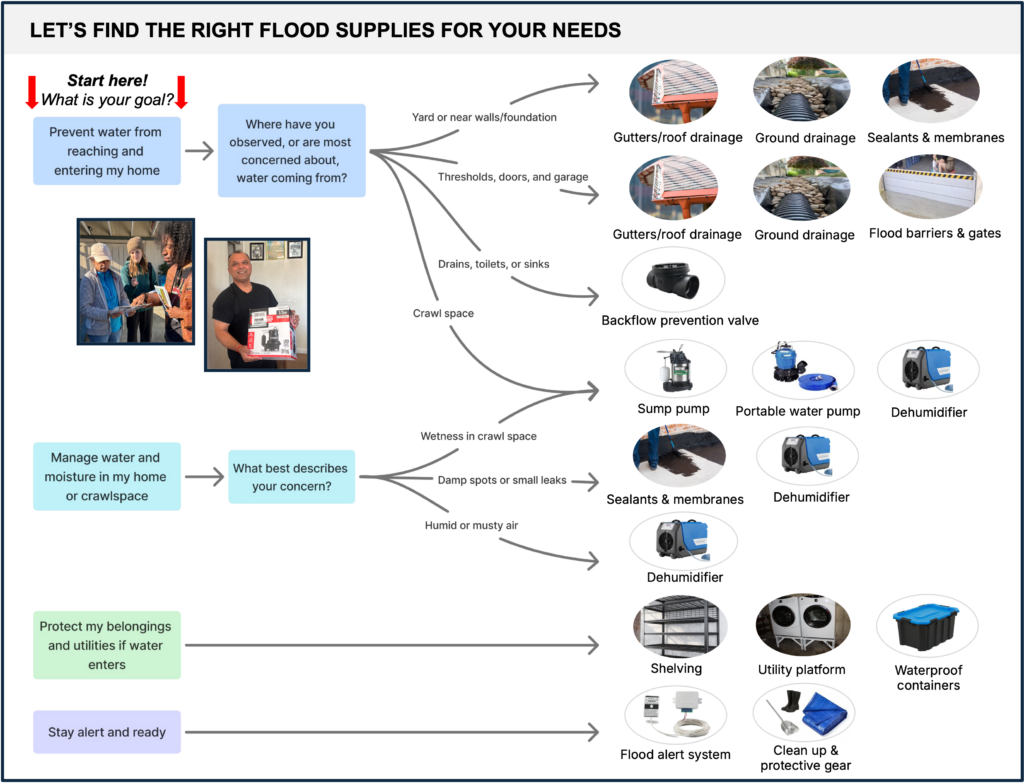
As part of the pilot, OneShoreline has developed simple flood readiness checklists and decision guides to help residents understand their flood risks and choose practical steps they can take—whether or not they’re participating in the pilot. These tools walk through common flooding scenarios, home conditions, and available protection options, and can be used before, during, and after a storm.