Table of Contents
Project Background
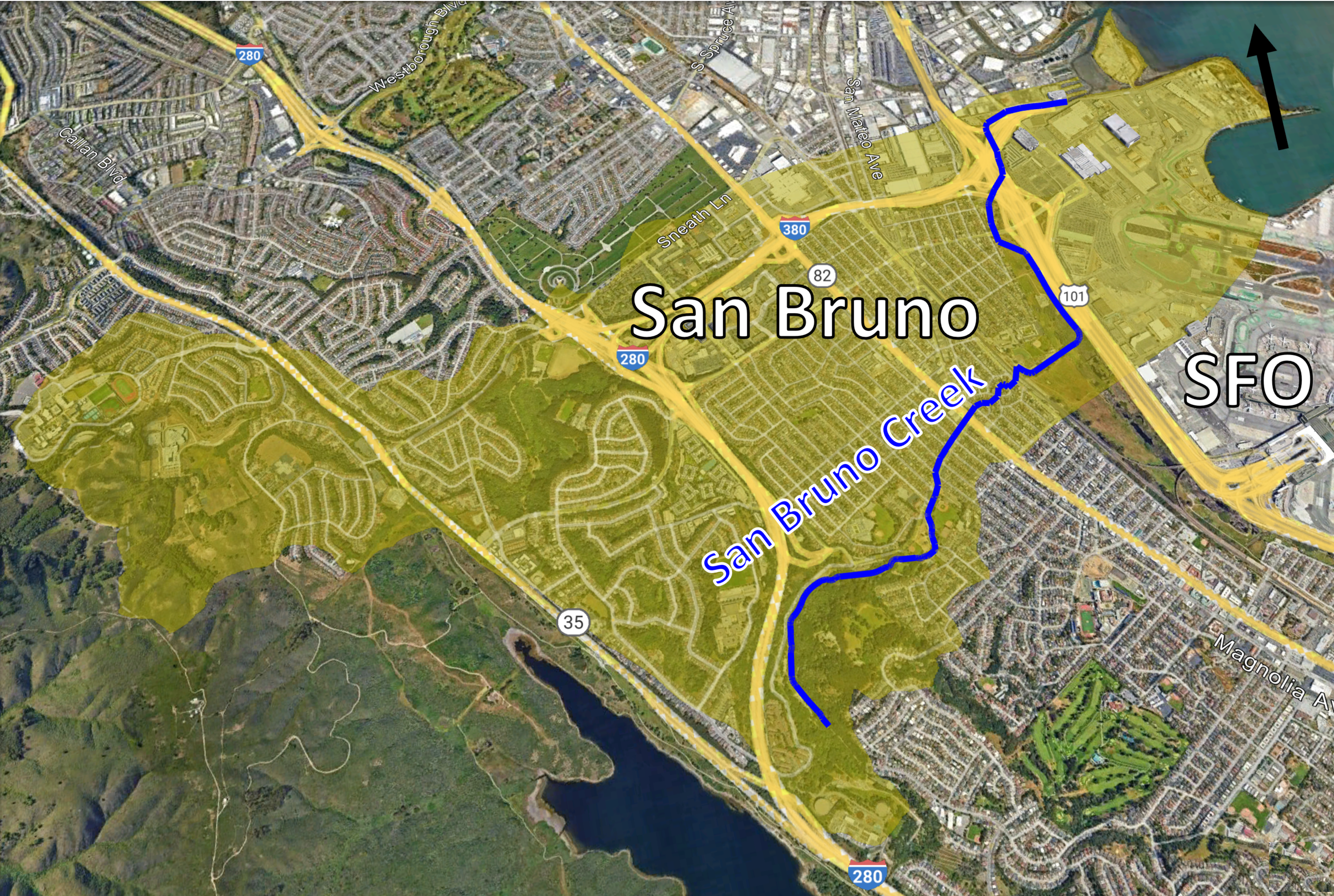
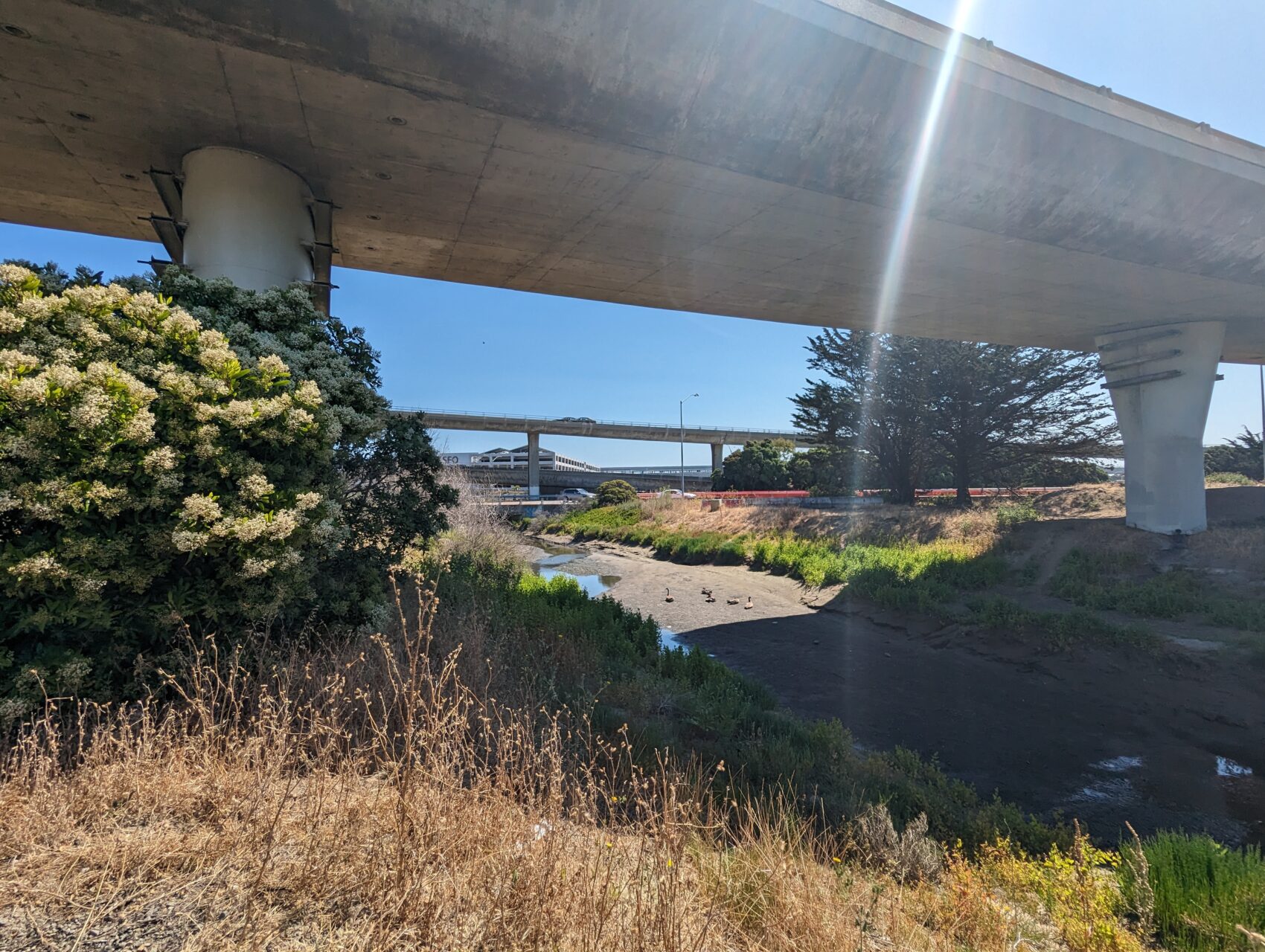
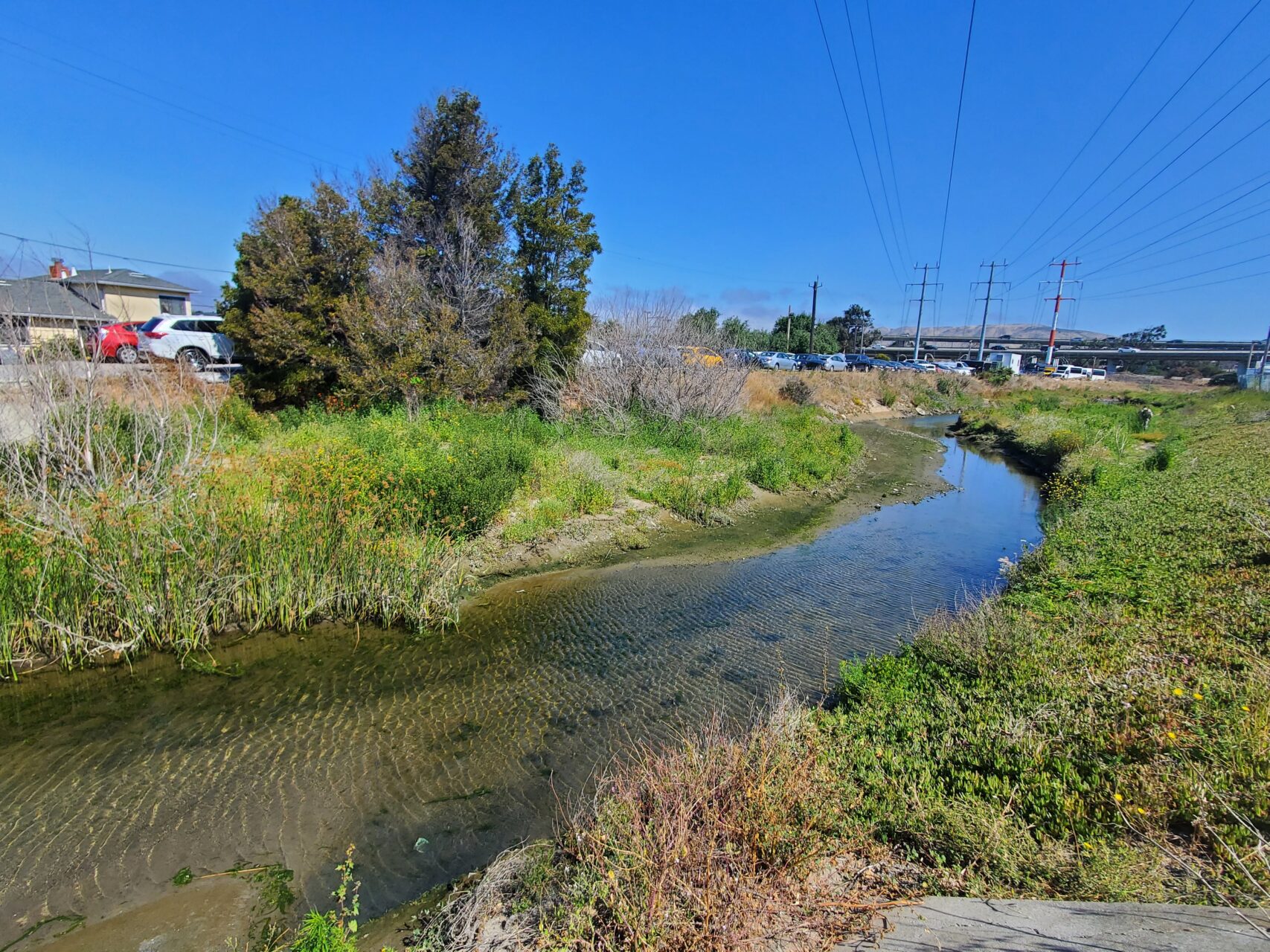
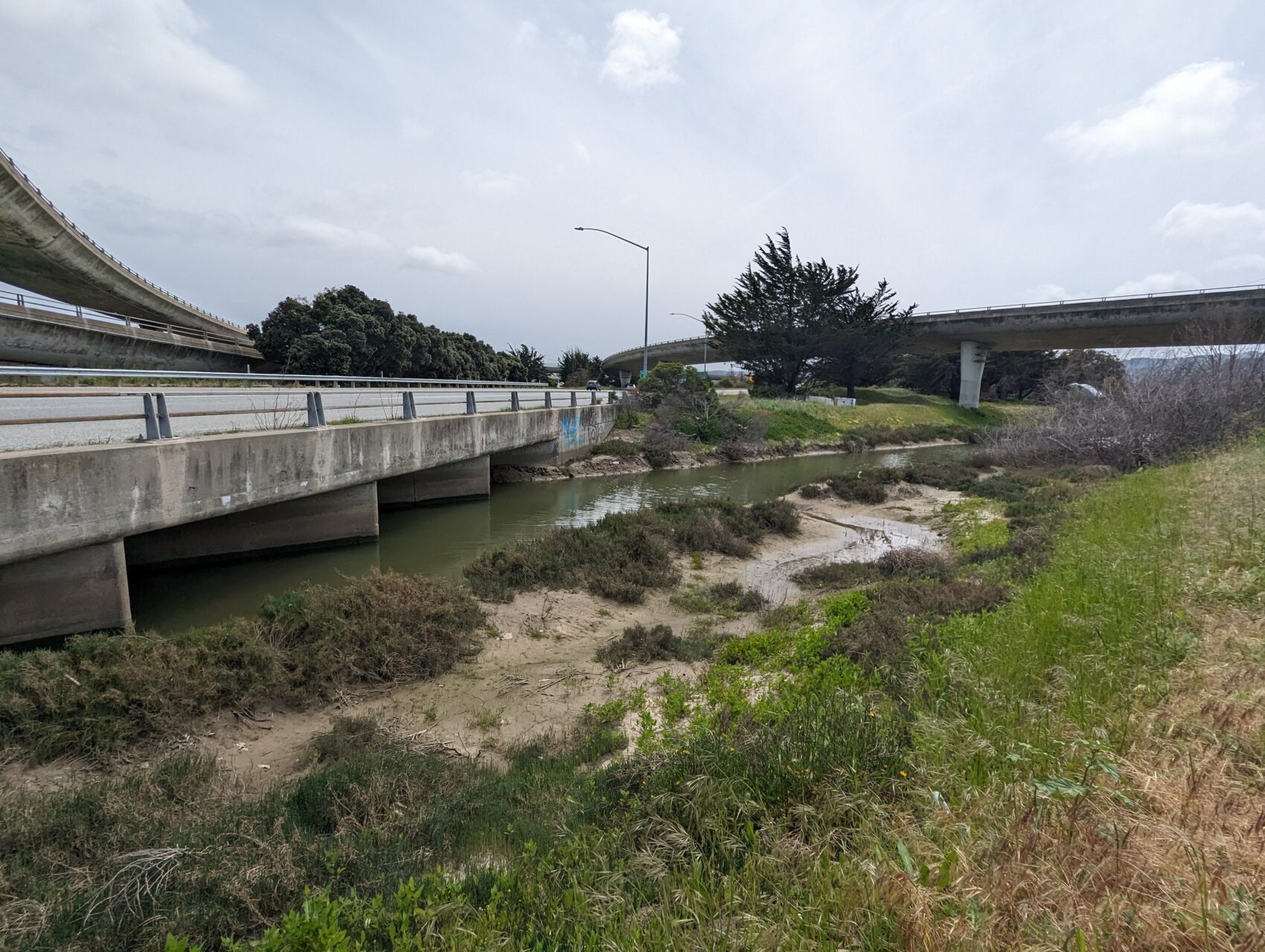
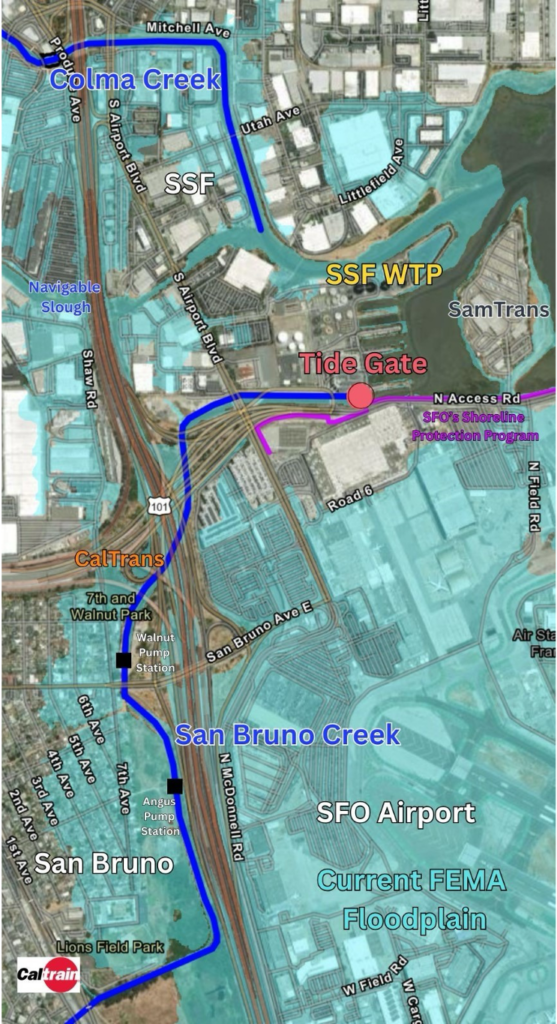
The San Bruno Creek Flood Zone is one of four long-standing active flood zones that OneShoreline inherited from the former San Mateo County Flood Control District and encompassing approximately 4.5 square miles of watershed area. San Bruno Creek, in its final stretch before flowing into San Francisco Bay, passes through a complex web of jurisdictions and critical infrastructure. The creek collects stormwater runoff from much of the City of San Bruno and parts of South San Francisco. Additional flows come from properties owned by SFO Airport, Caltrain, and Caltrans. To manage these flows, OneShoreline owns and operates two pump stations and a tide gate to convey stormwater from the creek to the Bay.
Neighborhoods that drain into the creek, especially the community of Belle Air, have endured chronic flooding for decades. This problem has worsened in recent years and is expected to intensify as climate change progresses.
The complexity of this situation has led to fragmented, short-term solutions, which fall short of addressing the long-term, transformative challenges posed by climate change.
Project Overview
OneShoreline is in the planning stage of the San Bruno Creek Resilience Project. Through extensive listening and community input, the project aims to address critical needs of San Bruno and the Belle Air neighborhood: reduce current and future flood risks, restore natural habitats, improve water quality, and create safer, more accessible public spaces for surrounding communities.
This work builds upon past studies and local expertise. The project area begins at the southern extent of San Bruno Creek, near Cupid’s Row and the Caltrain tracks. It extends the full length of the creek, including two OneShoreline owned pump stations and the tide gate. Along the Bay edge, it connects to South San Francisco Water Quality Control Plant and the SamTrans facility.
The project’s draft goals are:
- Reduce San Bruno’s Flood Risks: Address chronic and worsening flooding in San Bruno—particularly in Belle Air—by upgrading outdated infrastructure, improving stormwater management, and enhancing protection from sea level rise.
- Strengthen Regional Climate Resilience: Develop long-term, multi-jurisdictional solutions that protect critical infrastructure from the increasing impacts of climate change.
- Restore and Reconnect Natural and Public Spaces: Create a safer, healthier, and more connected watershed by reducing flood risks in vulnerable neighborhoods, restoring natural habitats, and improving access to open space.
The project area includes the shoreline from the south end of the South San Francisco Water Quality Control Plant to the south bank of the mouth of San Bruno Creek (where OneShoreline owns a tide gate), and along the creek up to the Caltrain tracks.
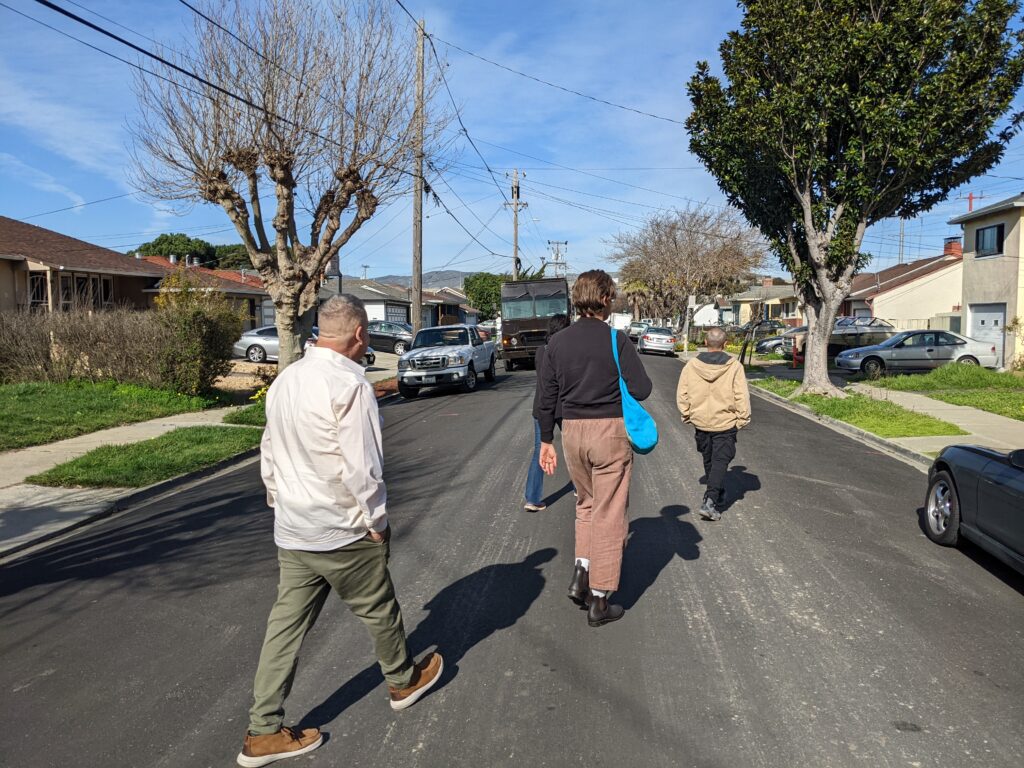
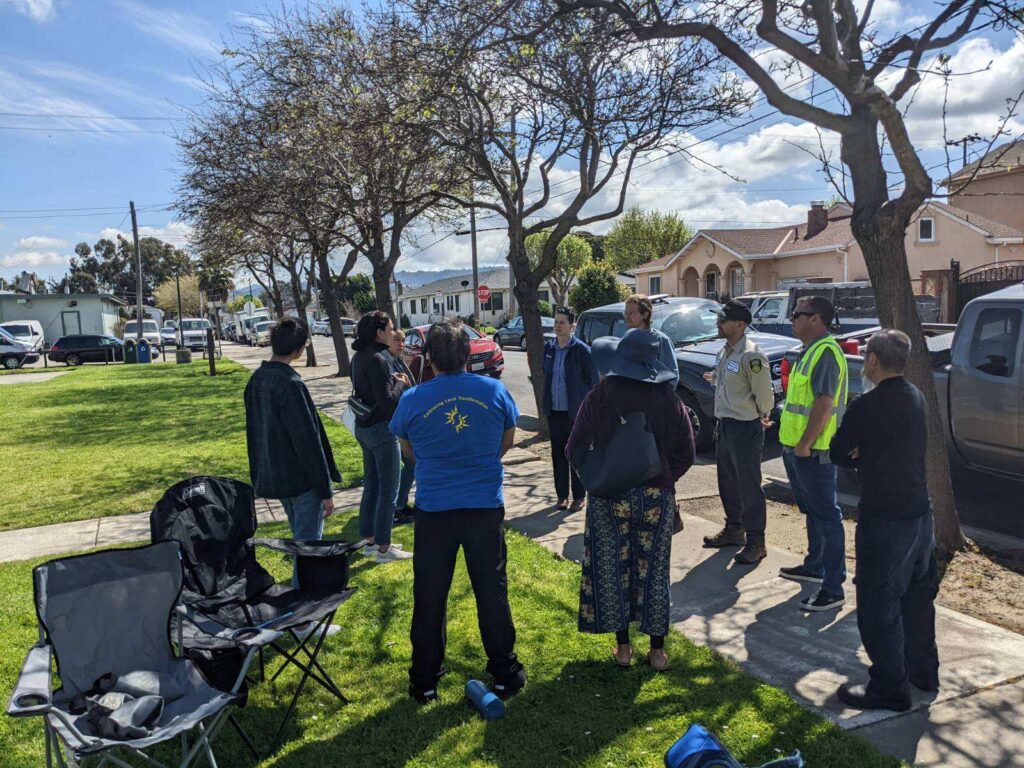
Beginning in January 2024, OneShoreline initiated work with local agencies and community partners, including Rise South City and Climate Resilient Communities, to engage with residents and businesses impacted by flooding in the Belle Air neighborhood (particularly along 7th Avenue). As part of this community engagement, OneShoreline and its partners have:
- Conducted listening sessions in English and Spanish
- Organized community walks to have conversations with residents through door-to-door outreach and distribute key information such as a “Quick Guide to Safety Before, During, and After a Storm” (available here in English and Spanish)
- Worked with community leads to document community experiences with flooding
- Shared back initial findings and collected further input from residents at two workshops, hosted at Belle Air Elementary School. Slides from the workshop presentation, which include key findings from outreach, project updates, and ways to get involved in community-led efforts, are available in English and Spanish.
- Insights from the community engagement conducted so far are summarized in Flooding in San Bruno, California: Community Insights from 2024.
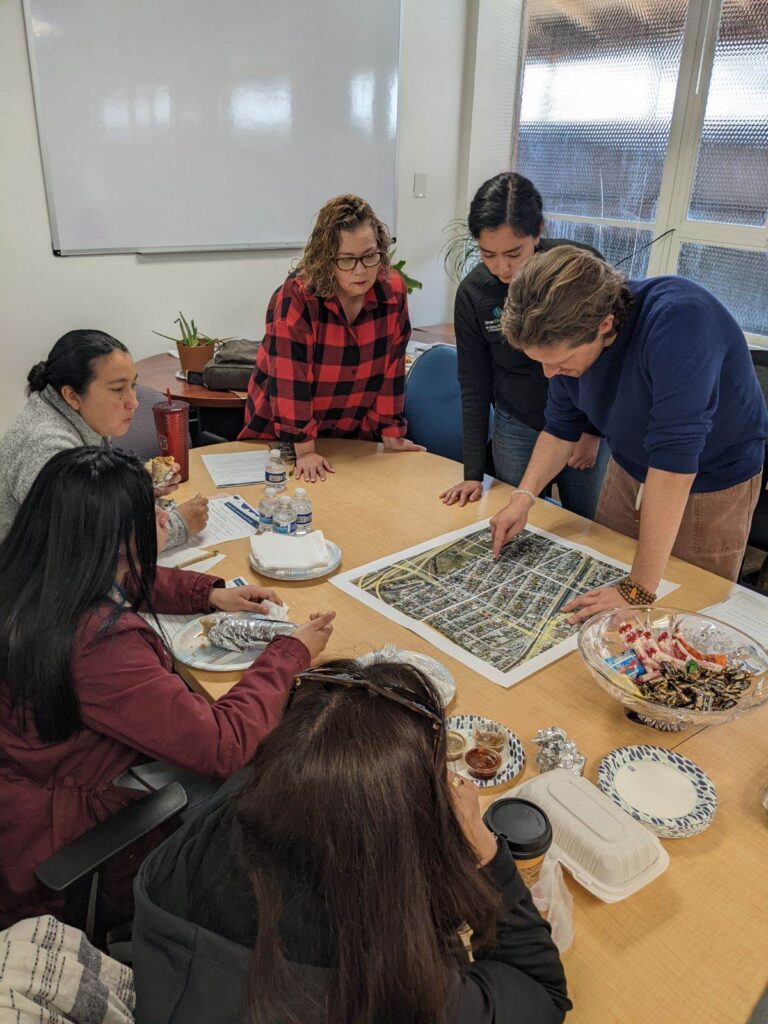
In August 2024, the U.S. Federal Emergency Management Agency (FEMA) awarded OneShoreline a $900,000 grant for the following project tasks:
- Collect the data needed for project designs
- Engage local stakeholders and the public
- Develop project alternatives, cost estimates, the conceptual design of a preferred alternative, and Draft Environmental Impact Report (DEIR)
- Develop a project description for California Environmental Quality Act (CEQA) documents
- Develop an application for further FEMA funding
Project Timeline
January 2020: The management of the San Bruno Creek Flood Zone transferred from the former San Mateo County Flood Control District to OneShoreline.
January 2024: Outreach activities in the Belle Air neighborhood of San Bruno began.
August 2024: A FEMA grant was awarded for the planning and design of a regional flood resilience project along the San Bruno Creek.
January – June 2025: Participated in community outreach and engagement as part of the C/CAG One Watershed Community Vulnerability Assessment Pilot Project. Advancing technical studies including hydrology and hydraulic assessment of flood vulnerabilities and solutions and completing an asset condition assessment.
Summer 2025: Released a Request for Proposals for a Planning and Engineering consultant.
November 2025: Issued Notice to Proceed to selected Planning and Engineering consultant and kicked off the project.
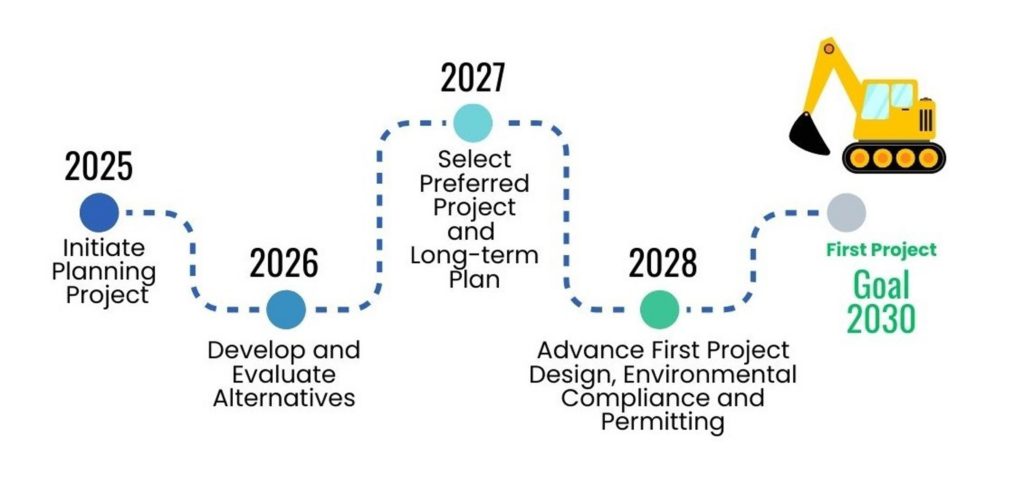
Opportunities for Feedback
OneShoreline is committed to transparent and authentic engagement with its project partners and the community. Here are the different ways that you could engage with this project:
Provide your input on our Draft Project Goals – Please drop us an email with your input on our draft project goals and preliminary project concepts.
Share your experience with flooding via a listening session — Please fill out the sign-up form in English or Spanish, and OneShoreline’s project partners will get in touch with you about setting up a time for a listening session.
Attend Resilient San Bruno meetings — These monthly meetings are hosted by Climate Resilient Communities, a community-based organization focused on empowering community voices to implement equitable climate solutions for unity, resilience, and justice. At these meetings, neighbors, city council members, and local agencies come together to discuss issues and concerns related to climate change in San Bruno. Contact Climate Resilient Communities (crc@crcommunities.org) for more information.